Summer may be winding down, but the changing season brings a new set of considerations for pet owners. Cooler mornings, shorter days, falling leaves, changing household routines, seasonal allergens, and increased wildlife activity can all influence an animal’s health and well-being.
The transition from summer to fall is an ideal time to reassess your pet’s daily routine and prepare for the months ahead. Whether you have a dog that spends hours outdoors or a cat that prefers watching the leaves fall from a sunny window, a few simple seasonal adjustments can help keep them comfortable, healthy, and safe.
Why Does the Change from Summer to Fall Affect Pets?
Animals are often more sensitive to seasonal changes than we realize. Temperature, daylight, humidity, activity levels, allergens, and changes in a household schedule can influence everything from a pet’s skin and coat to appetite and behavior.
Fall can also mean a return to school and more structured work schedules. A home that was busy throughout the summer may suddenly become quiet for much of the day.
For pets accustomed to constant activity and companionship, that change can require an adjustment period.
Maintaining animal well-being during fall therefore involves more than simply preparing for cooler weather. It means considering your pet’s physical health, emotional well-being, environment, exercise, nutrition, and safety.
1. Adjust Outdoor Activity as Temperatures Change
One of the best parts of fall is the return of comfortable outdoor temperatures.
Dogs that struggled with summer heat may be able to enjoy longer walks, hikes, and outdoor play sessions as temperatures cool. Increased exercise can be beneficial for cardiovascular health, weight management, mobility, and mental stimulation.
However, cooler weather doesn’t mean weather-related precautions disappear.
Early fall can still produce unexpectedly warm afternoons, while mornings and evenings may become considerably cooler. Pay attention to the actual conditions rather than the calendar.
Always provide access to fresh water during extended outdoor activity and watch for signs that your pet is becoming overly tired, hot, or cold.
Older pets, puppies, kittens, small breeds, and animals with certain health conditions may be particularly sensitive to sudden temperature changes.
2. Prepare for Shorter Days and Reduced Visibility
As fall progresses, daylight hours decrease. Morning walks may begin before sunrise, while evening walks that once happened in daylight can suddenly take place after dark.
Visibility becomes an important part of fall pet safety.
Consider using reflective collars, harnesses, leashes, or lights when walking dogs in low-light conditions. Pet owners should also make themselves visible to motorists, cyclists, and other pedestrians.
If your pet spends time in a fenced yard after dark, check gates and fencing periodically and make sure outdoor areas are adequately illuminated.
Identification is equally important. Make sure identification tags are readable and that your pet’s microchip registration information is current.
3. Continue Flea and Tick Prevention
A common misconception is that fleas and ticks disappear once summer ends.
Depending on your climate, ticks can remain active well into the fall, particularly during stretches of mild weather. Pets exploring wooded areas, tall grass, leaf piles, trails, or brush may continue to encounter parasites.
Continue veterinarian-recommended flea and tick prevention according to your pet’s individual needs.
After hikes or time in wooded and grassy areas, check your dog carefully. Pay particular attention around the ears, neck, legs, paws, and other areas where ticks can be difficult to notice.
Do not assume cooler temperatures automatically eliminate parasite risk.
4. Watch for Seasonal Allergies and Skin Changes
Humans aren’t the only ones who can experience seasonal allergies.
Environmental allergens can affect dogs and cats, and symptoms may appear as itching, paw licking, irritated skin, ear problems, or other changes.
Fall also brings changes in humidity and indoor heating, which can affect the skin and coat of some animals.
Regular grooming provides an opportunity to monitor your pet closely. Look for unusual redness, excessive scratching, hair loss, irritated paws, changes in the coat, or recurring ear irritation.
Persistent symptoms should be discussed with a veterinarian rather than treated solely with home remedies.
5. Be Careful Around Fallen Leaves, Mushrooms, and Yard Debris
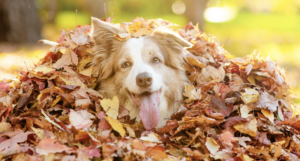
A pile of freshly fallen leaves may look like the perfect playground for a curious dog, but fall yards can hide potential hazards.
Mushrooms may appear in damp soil or beneath leaves, and some can be toxic if eaten. Leaf piles may also conceal sticks, sharp debris, insects, wildlife, or other hazards.
If you use lawn treatments, fertilizers, pesticides, or other chemicals during fall cleanup, store them securely and follow product safety instructions around animals.
The same principle applies inside garages and sheds. Seasonal automotive products and chemicals should always be kept where pets cannot reach them.
If you believe your pet has eaten something potentially toxic, contact a veterinarian or animal poison-control resource promptly.
6. Consider Changes in Diet and Weight
Cooler weather doesn’t automatically mean a pet needs more food.
A pet’s nutritional needs depend on factors including age, size, body condition, activity level, health, and lifestyle.
Some dogs become significantly more active during fall because they can comfortably spend more time outdoors. Others may become less active as daylight decreases and families spend more time indoors.
Rather than automatically increasing or decreasing food, monitor your pet’s body condition and activity.
Your veterinarian can help determine an appropriate calorie intake and healthy weight range for your individual animal.
Treats count, too. Fall often means more family gatherings and seasonal foods around the home. Many foods made for people are inappropriate or potentially dangerous for pets, so avoid making table scraps a regular part of your animal’s diet.
7. Pay Attention to Changes in Routine and Behavior
Seasonal pet wellness includes emotional health.
The transition from summer into fall frequently coincides with major household schedule changes. Children return to school, vacations end, work schedules become busier, and pets may suddenly spend more time alone.
Some animals adjust immediately. Others may display changes such as restlessness, increased vocalization, destructive behavior, changes in appetite, or difficulty settling.
Try to maintain predictable feeding, walking, play, and rest schedules.
Interactive toys, food puzzles, training sessions, sniff walks, and other enrichment activities can provide valuable mental stimulation. Even a few short periods of focused interaction throughout the day can make a difference.
If a significant behavioral change appears suddenly or persists, speak with your veterinarian. Behavioral changes can sometimes have an underlying medical cause.
8. Schedule a Seasonal Wellness Check
Fall can be an excellent time to evaluate your pet’s overall health, particularly if it has been a while since their last veterinary examination.
Routine wellness visits can help identify changes in weight, dental health, mobility, skin condition, and other areas before they become more significant.
For senior animals, seasonal transitions are also a good opportunity to pay closer attention to mobility. Cooler temperatures may make stiffness or joint discomfort more noticeable in some pets.
If your dog or cat seems reluctant to climb stairs, jump, get into a vehicle, stand after resting, or participate in activities they previously enjoyed, mention those changes to your veterinarian.
Schedule your wellness check now: (631) 754-0566
Frequently Asked Questions About Fall Pet Wellness
Do dogs need different care during the fall?
Dogs may need adjustments to their exercise schedules, parasite prevention, grooming, visibility equipment, and daily routines as the season changes. Individual needs depend on breed, age, health, activity level, and local climate.
Should I stop flea and tick prevention when summer ends?
Not automatically. Parasite activity varies by geographic location and weather conditions, and ticks may remain active during cooler months. Follow your veterinarian’s recommendations for your pet and region.
Do pets need more food when the weather gets colder?
Not necessarily. Calorie requirements are influenced by activity level, body condition, age, lifestyle, and health—not simply the outdoor temperature. Consult your veterinarian before making significant dietary changes.
Why is my pet acting differently when fall begins?
Changes in daylight, exercise, household schedules, school routines, and time spent alone can affect some animals. Significant or persistent behavioral changes should be discussed with a veterinarian to rule out medical causes.
What are common fall hazards for dogs and cats?
Potential hazards include toxic mushrooms, certain seasonal foods, chemicals used around homes and vehicles, reduced visibility after dark, parasites, wildlife encounters, and hidden objects beneath fallen leaves.
A Healthier Season Starts with Awareness
Fall can be one of the best seasons to enjoy with a pet. Cooler temperatures create new opportunities for walks, outdoor adventures, training, and family time without the intense heat of midsummer.
The key is recognizing that seasonal change affects animals, too.
Pay attention to changes in your pet’s behavior, appetite, activity, skin, coat, mobility, and overall comfort. Keep parasite prevention and identification current, maintain consistent routines, provide plenty of physical and mental stimulation, and remove seasonal hazards from your home and yard.
Most importantly, remember that animal well-being is not limited to responding when something goes wrong. It is an ongoing commitment to creating an environment in which animals can remain healthy, secure, comfortable, and engaged throughout every season.
As summer fades and the first signs of fall arrive, a little preparation today can help make the months ahead safer and more enjoyable for every member of the family—including the four-legged ones.